The Ultimate Fishing Guide: Gear, Tactics & Pro Tips
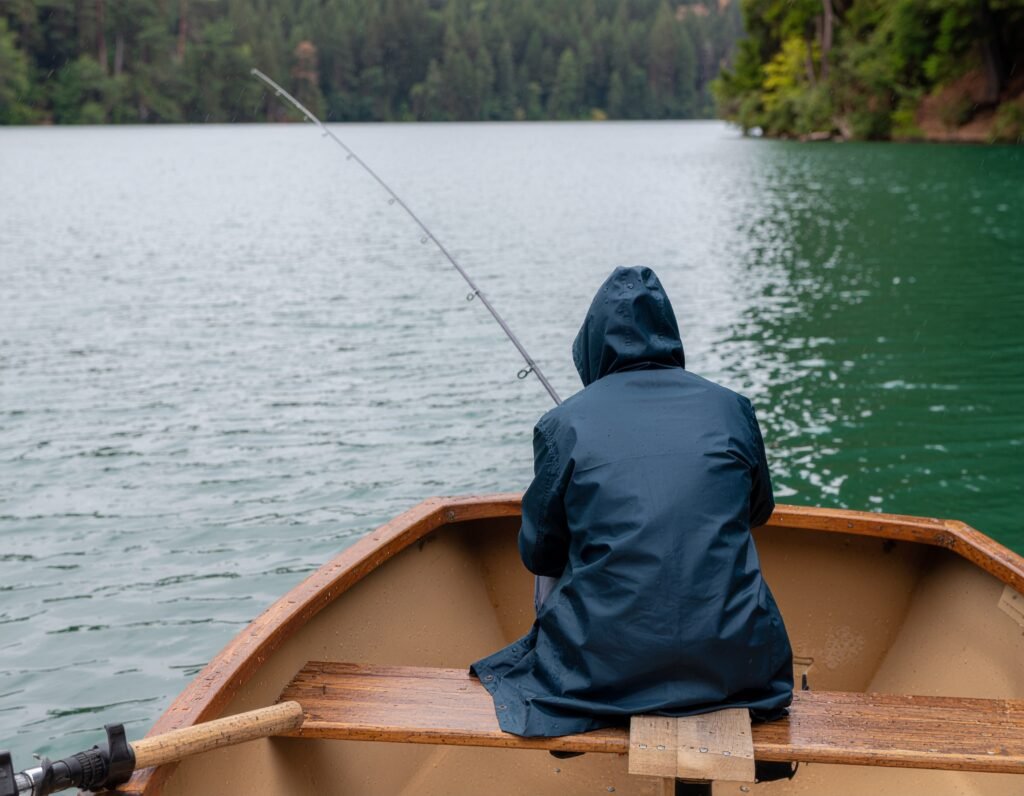
For many of us, fishing is much more than just catching fish. It is a passion, an ancient art that brings together patience, knowledge, and experience.
So, what are the secrets to mastering this art? What do those experienced anglers who always go home with a full bucket do differently? Is it luck, or an accumulation of knowledge? The answer is definitively the latter. In this comprehensive guide, we will explore every detail, from the philosophy of fishing to selecting the right equipment, from expert tactics to specific strategies for different fishing environments.
1. Fishing: More Than a Hobby
First and foremost, we must answer the question, “Why do we fish?” The answer to this question lies much deeper than the fish at the end of our line.
The Philosophy of Fishing: Patience, Observation, and Uniting with Nature
Fishing is an escape from the stress and chaos of modern life. From the moment you cast your line into the water, time begins to flow in a different dimension. Waiting is the essence of this activity. This wait teaches us patience. Being alert with the hope that a fish might strike at any moment enhances concentration and awareness.
A good angler is also a good observer. The color of the water, the direction of the wind, the small movements on the water’s surface, the spots where birds are diving… All these signs provide invaluable clues about life beneath the water. As you learn to read nature, you form a deeper connection with it. This is why fishing is as much an art of uniting with nature as it is a form of hunting.
Sustainability: A Legacy for the Future
It is our most fundamental responsibility to pass on this generosity that nature offers us to future generations. Sustainable fishing is vital for the continuation of this passion.
- Abide by Legal Limits: There are legal size and quantity limits set for each fish species. These limits are determined by scientific data to allow fish populations to reproduce and thrive. Returning undersized fish to the water is one of an angler’s greatest virtues.
- Catch & Release: Releasing fish that you will not eat or that are outside the legal limits back into the water with minimal harm is a cornerstone of fishing. It is important to handle the fish with wet hands (to avoid damaging its protective slime coat), carefully remove the hook with a tool like pliers, and return it to the water without exhausting it.
2. Choosing the Right Equipment: The Key to Success
Success in fishing requires being in the right place at the right time with the right equipment. Equipment selection can be confusing, especially for beginners. Let’s simplify this topic.
Rods
The rod is the most fundamental link between you and the fish. There are different rods with different features for various types of fishing.
- Material: They are generally made of carbon fiber, graphite, or fiberglass. Carbon rods are light, sensitive, and expensive, while fiberglass rods are heavier, more durable, and economical. Composite rods (a mix of carbon and fiberglass) offer a good balance for beginners.
- Action: This refers to how much of the rod bends and how quickly it does so. Fast-action rods bend only at the tip, which increases sensitivity and the ability to impart action to the lure. Slow-action rods bend more fully and evenly from the butt, which increases casting distance and better absorbs the shock of a fish’s fight.
- Casting Weight: This indicates the optimal lure weight range in grams that you can cast most efficiently with your rod. For example, with a rod rated 5-25g, you will get the best performance with lures within this range. Using lures below or above this value will reduce your casting distance and accuracy.
Reels
The reel is the mechanism that stores your line and gives you power during the fight with the fish.
- Spinning Reels: This is the most common type of reel. It is easy to use, has a low risk of backlash (wind knots), and can be used for a wide range of applications, from light lures to heavy sinkers. Ideal for beginners.
- Baitcasting Reels: Preferred by more experienced anglers, these reels offer more accurate casting and greater power control. However, they require practice to avoid the line tangles known as a “bird’s nest.”
- Gear Ratio: This indicates how many times the spool turns for one full rotation of the handle. For example, a reel with a 5.2:1 gear ratio turns the spool 5.2 times for every single turn of the handle. High-speed reels are used for fast retrieves, while low-speed reels provide more torque for fighting large fish.
- Drag System: This is the system that allows the spool to release line in a controlled manner when a fish pulls. The drag should be set to a tension slightly lower than the breaking strength of your line. This prevents the line from snapping during sudden surges from the fish and helps you tire it out.
Lines
Your line is the lifeline between you and the fish. Your choice can determine the fate of your catch.
- Monofilament: These nylon-based lines are flexible, sink slowly, and are economical. Their elasticity is an advantage in absorbing the shock of a fish’s headshakes. The downside is their memory and susceptibility to UV damage over time.
- Fluorocarbon: Because it refracts light almost identically to water, it is nearly invisible underwater. It is very resistant to abrasion and has high sensitivity due to its low stretch. It is often used as a leader material with monofilament or braided lines.
- Braided Line: It has zero stretch, allowing you to feel even the slightest bites. Its strength-to-diameter ratio is very high, meaning a thin braided line can be stronger than a thick monofilament line. This allows for longer casts. Due to its high visibility, an invisible fluorocarbon leader is usually tied to the end.
Terminal Tackle
Hooks, swivels, clips, and sinkers… these small parts can be the weakest link in your setup.
Hooks: Always use sharp, rust-proof hooks that are appropriately sized for the target fish’s mouth structure. Do not hesitate to replace a hook when it becomes dull. Remember, it’s the hook that catches the fish, not the bait.
Baits
This is perhaps the most enjoyable and complex topic in fishing.
- Natural Baits: Live baits like shrimp, leeches, sandworms, bloodworms, and earthworms are very effective, especially in shore fishing. Dead baits like sardines, silversides, or shrimp are also irresistible to many predator fish.
- Artificial Lures:
- Wobblers (Hard Baits): Come in many types, such as topwater, diving, and sinking. They are favorites for predators like sea bass, bluefish, and bonito.
- Soft Plastics: With their realistic appearance and action, they are very popular, especially for bass and pike. They are typically used with weighted hooks called jig heads.
- Metal Lures (Jigs & Spoons): Because they can be cast far and sink quickly, they are used effectively from both shore and boat. They appeal to a wide range of predators, from horse mackerel to snappers.
3. Fishing Tactics and Tips
Having the right equipment is half the battle. The rest is knowledge, experience, and strategy.
Where Do Fish Hold?
Fish do not wander randomly. They generally prefer places where they can hide, hunt, and shelter from the current.
- Look for Structure: Rocks, shipwrecks, weed beds, pier pilings, and drop-offs are shelters and hunting grounds for fish. Such structures attract fish like a magnet.
- Use the Current: The current carries bait and small fish in a specific direction. Predator fish lie in ambush behind or to the side of this current, waiting for prey to pass by. The times when the current starts and stops are often the most productive.
- Feeding Times: Dawn and dusk are considered the most productive times in fishing. During these hours, predator fish are actively feeding. Night fishing can also be very effective, especially for species like sea bass and bluefish.
Knots
You can have the most expensive equipment, but a weak knot can cause you to lose the fish of a lifetime. It is mandatory to learn a few basic, strong knots.
- Palomar Knot: One of the easiest knots to learn, it holds very strong with both braided and monofilament lines.
- FG Knot: An incredibly strong and nearly seamless knot used to connect braided line to a fluorocarbon leader. While it requires some practice, it will become your go-to knot once mastered.
- Improved Clinch Knot: A classic and reliable knot widely used to tie monofilament line to a hook or clip.
Bringing the Lure to Life
Simply casting and retrieving an artificial lure is often not enough. You must give it life.
- Vary Your Retrieve Speed: Instead of reeling at a constant speed, pause your lure, let it sit, suddenly speed it up, and make small twitches. These erratic movements create the impression of an injured and easy prey, triggering the predatory instincts of fish.
- Stealth and Silence: Fish can be very skittish, especially in shallow, clear water. Avoid making noise near the water’s edge, casting your shadow on the water, and wearing brightly colored clothing. Make the first cast before the fish has a chance to notice you.
4. Fishing in Different Waters
Every body of water is a unique ecosystem with different fish species and, therefore, different fishing strategies. There is a world of difference between fishing in a flowing river and fishing in the open sea.
Freshwater Fishing
1. River and Stream Fishing
The dynamism of fast-flowing waters makes this discipline very exciting. The key here is to “read the water.”
- Key Features: A constant current, eddies, deep pools, and shallow, fast-flowing sections (riffles). Fish often lie in ambush where the current is slower or behind structures that break the current (rocks, logs, etc.) to conserve energy.
- Global Target Species: Trout, Salmon, Grayling, Smallmouth Bass.
- Popular Techniques: Fly fishing is a classic for these environments. Lure fishing (angling with small spinners, spoons, and hard baits) is also very effective. Drifting natural bait with the current also yields results.
- Tip: Always cast upstream and allow your lure to drift naturally into the fish’s feeding zone. Remember, river fish almost always face into the current.
2. Lake and Pond Fishing
Still waters often hold larger fish and require different strategies. Success here depends on discovering underwater structures.
- Key Features: Still or very slow-moving water, sudden depth changes, underwater vegetation, submerged trees, and rocky areas. The thermocline, a layer that separates water of different temperatures, especially in summer, provides important clues about where fish will be.
- Global Target Species: Largemouth Bass, Pike, Walleye, Carp, Perch.
- Popular Techniques: Casting towards structures along the bank, float fishing, bottom fishing for carp, and trolling from a boat are the most popular techniques.
- Tip: Use a fish finder or a depth map to locate underwater holes, humps, and structures. Fish love to congregate in these areas. The early morning and late evening hours are often the most productive, as fish move into the shallows to feed.
Saltwater Fishing
1. Shore and Surf Fishing
The biggest variables here are tides and waves.
- Key Features: Tidal movements, waves, coastal currents, sandbars, rocky points, piers, and breakwaters.
- Global Target Species: Striped Bass, Bluefish, Redfish (Red Drum), Flounder/Halibut, Snook.
- Popular Techniques: Surfcasting with heavy sinkers and natural bait (shrimp, crab, cut bait) is the most common. Casting from rocky areas or piers with topwater lures, jigs, and hard baits is also very popular.
- Tip: Always follow the tide calendar. Many coastal fish begin to feed actively during rising or falling tides, as the moving water stirs up small creatures.
2. Offshore and Deep-Sea Fishing
This is the ultimate pursuit for adrenaline junkies who want to battle true giants. This type of fishing requires a boat and serious preparation.
- Key Features: Large and deep bodies of water. Success often depends on finding underwater structures like reefs and wrecks or locating schools of migrating fish in open water.
- Global Target Species: Tuna, Marlin, Sailfish, Mahi-Mahi (Dorado), Grouper, Snapper.
- Popular Techniques: Trolling, which involves pulling large lures or baited rigs behind a moving boat, is the most common method. Vertical jigging over deep-water reefs and bottom fishing with bait rigs are also very effective.
- Tip: Keep an eye on the sky! Seabirds diving on baitfish at the surface are often the best indicator of large predators feeding below.
5. Safety
While fishing is an enjoyable hobby, it can also be dangerous if care is not taken.
- Check the Weather: Always check the weather forecast, especially if you are heading out to sea or on large lakes. A sudden storm can be very dangerous.
- Secure Footing: Wear non-slip footwear when fishing on rocky areas. Never underestimate the power of the waves.
Final Word: Tight Lines!
Fishing is a lifelong learning process. Every trip, every lost fish, and every successful day teaches you a new lesson. The information we’ve shared in this article is a starting point to guide you on this long and enjoyable journey. But remember, the best teacher is nature itself.
Read, research, watch, but most importantly, get out on the water. Try different lures, explore new places, and talk to other anglers. Be patient, respect nature, and enjoy this wonderful passion.
Tight Lines!