Top 5 Simulation Racing Wheels: Reviews and Recommendations
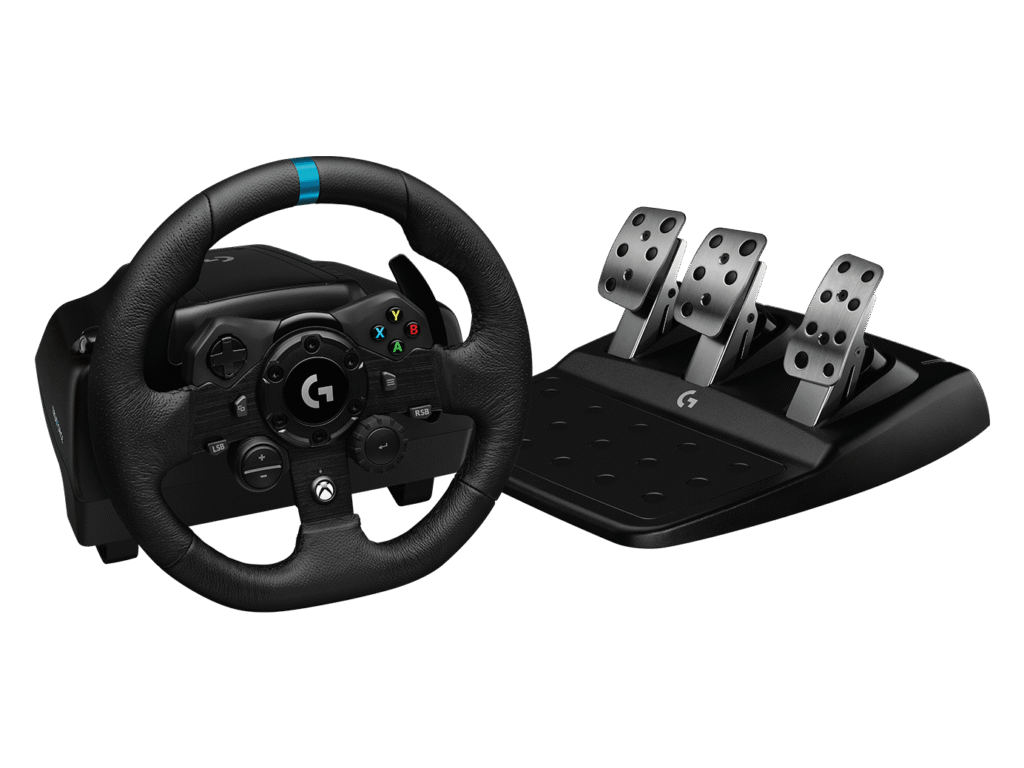
We are in the middle of a golden age for sim racing. “Direct Drive” (DD) systems, a technology once only accessible to multi-million dollar F1 teams and professional drivers, are now at the center of a revolution that is transforming modest home setups into professional training simulators.
Why Force Feedback (FFB) Technology is Everything
The most important feature of a simulation wheel, the soul of the entire system, is Force Feedback (FFB). FFB is the language through which the simulation speaks to you. It is FFB that communicates the texture of the asphalt, the subtle vibration when the tires lock up, the loss of traction, or the weight of the G-force in a corner.
The technology used to produce this language determines how realistic (and how expensive) your experience will be. Three main technologies dominate the market:
1. Gear-Driven
These systems amplify the torque of a small motor through a series of gears to rotate the steering shaft.
- Pros: Low manufacturing cost. This is the most affordable entry point into the world of FFB. Products from brands like Logitech are durable and reliable.
- Cons: The meshing of gears creates a “notchy” or “cogging” feel. Users often describe these systems as noisy. The mechanical structure can create a slight dead zone around the wheel’s center and offers the lowest accuracy and detail compared to other systems.
2. Belt-Driven & Hybrid
These systems use a belt and pulley system instead of gears to transmit power from the motor to the shaft. Hybrid systems, like the Thrustmaster T248, use both belts and gears to balance cost and performance.
- Pros: They offer a much smoother and quieter operation than gear systems. Users upgrading from a Logitech to a belt-driven Thrustmaster T300 often describe the difference as “night and day.”
- Cons: The belt itself can absorb and dampen the fine, high-frequency details coming from the simulation, creating a muted feel. Also, belts can stretch or wear out over time. Some popular models (like the T300) are notorious for overheating issues.
3. Direct Drive (DD)
The revolution begins here. Direct Drive (DD) is the gold standard of the simulation world. In this system, the steering wheel is mounted directly onto the shaft of a large, powerful industrial servo motor, without any gears, belts, or other intermediaries. There are no mechanical parts to obstruct, dampen, or delay the signal. Force feedback is transmitted from the motor to your hands 1:1, losslessly.
- Pros: Unmatched detail, responsiveness, and power. You feel every texture on the road surface, the tire flex, and weight transfer almost instantly. The experience is incredibly fluid, without any catching or mechanical roughness. It offers maximum realism, the fastest response time, and high durability due to fewer moving parts.
- Cons: Historically, they were very expensive (though this is changing). The high torque they generate requires a sturdy desk or, ideally, a dedicated sim racing cockpit. The complex settings options can be daunting for beginners.
The Market Revolution: The Upgrade Path
For many years, there was a clear path into sim racing: start with Gear-Driven, then upgrade to Belt-Driven, and finally move to the dream DD system. Each step offered a tangible improvement for a higher cost. However, this path is no longer valid.
The introduction of affordable, high-quality DD systems by brands like MOZA and Fanatec has created a value gap in the market. Current data shows that an entry-level DD package like the MOZA R5 is now sold at the same price, or sometimes even cheaper, than an established belt-driven model like the Thrustmaster T300 RS GT. This virtually invalidates the traditional mid-segment belt-driven market for PC gamers.
The Top 5 Champions: Analysis & Recommendation
1. The People’s Champion (Most Used): Logitech G923
The Logitech G923 is the undisputed king of the entry-level market. As the modern successor to the legendary G29/G920, it is the default starting point for millions of sim racers.
- Technical Breakdown: Uses a gear-driven system and Logitech’s proprietary haptic feedback technology called TrueForce. It offers a 900° rotation angle and comes out of the box with a 3-pedal set featuring a progressive brake spring. The steering wheel is wrapped in hand-stitched leather.
- The TrueForce Factor: TrueForce is a system that uses in-game audio cues to translate information like engine RPM or road texture into high-frequency vibrations. The community is split on this: some find it immersive, while others see it as a distracting gimmick.
- Performance and Views: Praised for its solid build quality, reliability, and being a complete package for its price. However, criticism focuses on the gear mechanism being noisy and rough, and the FFB feeling much less detailed compared to DD systems.
- Ideal For: Beginners buying a wheel for the first time, those on a strict budget, and users looking for plug-and-play ease and proven reliability.
2. The Challenger: Thrustmaster T248
The Thrustmaster T248 is positioned as a direct competitor to the G923. Its goal is to offer superior FFB technology and more features at a similar price point.
- Technical Breakdown: Uses a Hybrid (Belt + Gear) FFB system. It comes with the T3PM 3-pedal set, which features magnetic Hall effect sensors and adjustable brake stiffness. These pedals are technologically superior and longer-lasting than the G923’s potentiometer-based pedals. It also includes an LCD telemetry screen on the wheel.
- Performance and Views: The hybrid FFB system is consistently rated as stronger and more detailed than the G923’s gear system. The superior T3PM pedals are also a major plus. However, it receives heavy criticism for its noisy, magnetic paddle shifters and a less premium feel compared to the G923’s leather-wrapped wheel.
- Ideal For: Selective beginners who are budget-conscious but demand better FFB performance and superior pedals than the G923, focusing on raw performance over premium feel.
3. The Game Changer (DD Starter Pack): MOZA R5 Bundle
The MOZA R5 is a revolutionary product that brings the high-fidelity experience of Direct Drive to a mainstream price point. It is often cited as the product offering the “best performance for the price” for entry into serious sim racing.
- Technical Breakdown: Features a Direct Drive base offering 5.5 Nm of peak torque. The bundle includes a 280mm ES steering wheel and the SR-P Lite 2-pedal set.
- Performance and Views: Feedback is overwhelmingly positive regarding the DD FFB’s fluidity, detail, and responsiveness. It is considered a massive leap from anyone coming from gear or belt systems. However, criticism is directed at the package’s accompanying components: the SR-P Lite pedals are considered basic, and many users feel the need to purchase the brake performance kit separately.
- Ideal For: PC gamers who want to skip belt systems and jump straight into the true DD experience. It currently offers the best value package on the market.
4. The Ecosystem King (Mid-Range Versatile): Fanatec CSL DD (8Nm)
The Fanatec CSL DD is a benchmark for modular, expandable mid-range performance. This is more of a long-term investment than a single purchase.
- Technical Breakdown: Produces 5 Nm of torque as standard, but its true potential is unlocked when upgraded to 8 Nm with the separately sold “Boost Kit 180.” This 8Nm version offers the true potential of this base.
- Performance and Views: The FFB is described as sharp, detailed, and a significant step up from lower-segment wheels. The key advantage over the MOZA R5 is the ability to upgrade to 8Nm. The biggest criticism used to be directed at Fanatec’s past shipping and customer service issues, and the old plastic QR1 quick-release system (largely solved now with the metal QR2).
- Ideal For: Users who think long-term, are looking for a clear upgrade path, want to start today with 5Nm (or 8Nm) and expand their system with different wheels, pedals, and shifters tomorrow. It’s the right strategic investment.
5. High-End Performance: Simucube 2 Pro
The Simucube 2 Pro is not a toy but a professional-grade tool. It is considered the endgame wheel base for enthusiasts who demand the absolute highest accuracy, responsiveness, and power without compromise.
- Technical Breakdown: Uses an industrial-grade, high-response servo motor that produces a full 25 Nm of peak torque. Features include ultra-low latency, advanced tuning software (TrueDrive), and wireless wheel support.
- Performance and Views: Universally praised for having the smoothest, most detailed, and cleanest FFB on the market. Users report feeling details that are completely missing (or muted) on lower-tier wheel bases. This is not a plug-and-play device; it requires an investment of both money and time to get the best out of it.
- Ideal For: Dedicated sim racers for whom budget is a secondary concern to the pursuit of absolute realism. Drawbacks: Its very high price and the mandatory requirement for a very sturdy aluminum profile cockpit to manage this immense torque.
Beyond the Wheel Base: Why Pedals and Cockpit May Be More Important
Make no mistake: When it comes to improving your lap times and gaining consistency, pedals (especially the brake) are more important than the wheel.
It is an open secret that the pedals in entry-level bundles, like the MOZA R5, are often the weakest link. Upgrading to a good load-cell brake pedal (which measures the pressure you apply, not just the travel) is the single most important upgrade you can make for your lap times.
Similarly, the mounting solution is critical. Clamping a wheel like the Logitech G923 to a regular desk is fine. However, even a 5Nm DD wheel will cause flex and shake the entire desk. The rule is simple: If you are buying a Direct Drive wheel, you must budget for at least a sturdy wheel stand or, ideally, a full cockpit. Otherwise, you will lose most of the detail and power the DD offers to your desk’s flexing, and you won’t get full value for your money.
The Checkered Flag – Recommendations
We’ve analyzed the market, understood the technologies, and reviewed the champions. Now it’s time to decide. Here are our recommendations based on different budgets and goals:
1. Beginners
- Decision: Logitech G923 vs. Thrustmaster T248.
- Recommendation: If you want raw FFB performance, better-technology pedals, and more detail, choose the Thrustmaster T248. If a premium touch (leather wheel), a quieter experience, and years of proven reliability are more important to you, the Logitech G923 may be the better choice.
2. First-Time DD Buyers
- Decision: The ultimate showdown: MOZA R5 Bundle vs. Fanatec CSL DD (8Nm).
- Recommendation: If you are a PC-only user, want the best “out-of-the-box” DD experience possible for a single price, and value instant performance over long-term modularity, the MOZA R5 Bundle offers great value right now. If you view this purchase as the first step in a long journey, and you value a wide upgrade path, a rich ecosystem variety, higher peak torque, and potential console compatibility, the Fanatec CSL DD (8Nm) is the right strategic investment for you.
3. Uncompromising Enthusiasts
- Decision: Simucube 2 Pro
- Recommendation: This is the choice for dedicated sim racers where budget is secondary to the pursuit of accuracy and realism. It is not an expense but an investment in the ultimate simulation experience. Remember: To do this choice justice, an equal investment in a sturdy cockpit and high-end pedals is mandatory to avoid bottlenecking its performance.
Conclusion: The right choice is finding the balance between your budget, the desired level of realism (FFB type), and how long-term you want to commit to a platform.
We hope this guide has helped you find the right wheel for you.