Major Days and Festivals Around the World
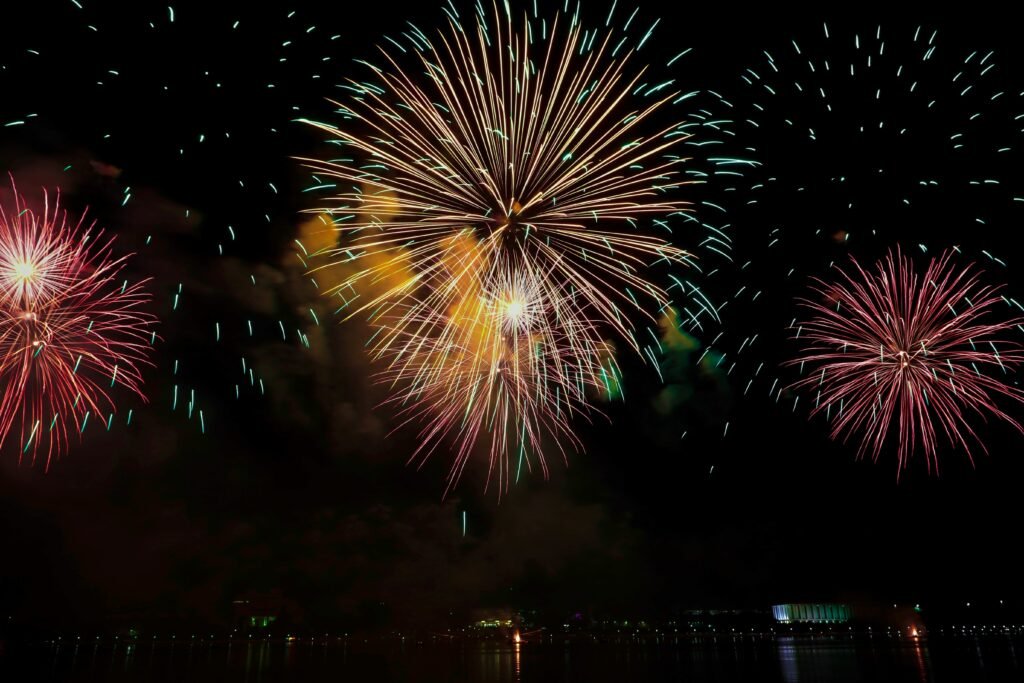
At certain times of the year, cities transform into massive stages; streets overflow with color, music, dance, and most importantly, the collective joy of coming together. These celebrations, or festivals, are cultural mirrors reflecting a society’s history, beliefs, sorrows, and joys.
In this detailed guide, we will embark on a global journey, from Brazil’s fiery samba and India’s mystical lights to Spain’s chaotic tomato battle and Japan’s ice sculptures.
1. The Fire of Latin America
Rio Carnival (Brazil): The World’s Biggest Party
At the top of our list is the Rio Carnival, an event that fully deserves its title as “The Greatest Show on Earth.”
- What is it? Rio Carnival is Brazil’s, and perhaps the world’s, most famous festival. Drawing millions of people onto the streets of Rio de Janeiro, this event is the culmination of months of preparation by samba schools. It is not just a parade but a 24/7 entertainment marathon filled with street parties called “blocos” that envelop the entire city.
- Why is it celebrated? The carnival’s roots lie in European Catholic traditions. It is the final celebration before the period of “Lent.” Lent is a 40-day period of fasting, penance, and abstinence from meat leading up to Easter. Carnival (“Carne Vale” – “Farewell to Meat”) is precisely the “confessional” party where people indulge in “worldly pleasures” one last time before this period of abstinence. Over time, this European tradition blended with the rhythms of the Afro-Brazilian population and indigenous culture to take on its current, unique samba-focused form.
- When is it celebrated? The dates change each year according to Easter, generally falling in early February or March. It officially begins on a Friday and lasts for 5 days, ending on “Ash Wednesday,” but the street parties start weeks in advance.
- Where is it celebrated? The epicenter is Rio de Janeiro. The main event is the samba school competition held in the massive stadium called the “Sambadrome.” However, carnival in Brazil is not limited to Rio. Salvador is famous for its parties on giant trucks, highlighting more African rhythms. Recife and Olinda offer a different carnival experience, featuring traditional “Frevo” dancing and giant puppets.
Día de Muertos (Day of the Dead) (Mexico): Commemorating Life
From the exuberance of Rio, we move to the profound and colorful commemorative tradition of Mexico.
- What is it? Contrary to popular belief, Día de Muertos is not a version of Halloween or a somber day of mourning. On the contrary, it is a joyful, colorful, and profound celebration to remember deceased loved ones and welcome their spirits back to the world. It is based on the idea that life is a cycle and death is a natural part of that cycle.
- Why is it celebrated? Its roots trace back to the pre-Spanish colonial era, particularly to the Aztecs. The Aztecs believed that the souls of the dead traveled to an underworld called “Mictlán” and were allowed to return at specific times. With the arrival of the Spanish, these indigenous rituals merged with the Catholic “All Saints’ Day” and “All Souls’ Day,” taking on its current syncretic (a blend of two different beliefs) form.
- When is it celebrated? It runs from October 31st to November 2nd each year. November 1st (“Día de los Inocentes”) is for remembering child spirits, while November 2nd is for adult spirits.
- Where is it celebrated? It is celebrated throughout Mexico. However, Oaxaca is one of the places with the most magnificent celebrations. Here, cemeteries are decorated with “Cempasúchil” (Marigolds), and massive “ofrendas” (altars) are built. In Mexico City, a giant parade, popularized by the movie “Coco,” is held. The celebrations on Lake Pátzcuaro and Janitzio Island offer a particularly mystical and visual feast.
2. The Historical Texture of Europe
Venice Carnival (Italy)
- What is it? It is one of the world’s oldest and most aesthetic carnivals. The Venice Carnival is a mysterious and elegant celebration where the streets are filled with people wearing elaborate costumes and the famous Venetian masks, each a work of art. It is less of a party and more of a historical reenactment and visual spectacle.
- Why is it celebrated? Its history dates back to the 11th century. Like the Rio Carnival, it was a celebration before Lent. However, its most important function in Venice was social. The masks temporarily eliminated the rigid hierarchy of the Republic of Venice. Nobility and commoners could hide their identities behind masks, allowing them to socialize equally and break social rules.
- When is it celebrated? It coincides with the Rio Carnival, lasting for the two weeks leading up to Ash Wednesday. It usually falls in late January or February.
- Where is it celebrated? Only in Venice, Italy. The main events take place in the heart of the city, St. Mark’s Square (Piazza San Marco). Ornate gondola parades on the canals and masked balls held in private palaces are iconic moments of the festival.
Oktoberfest (Germany): More Than a Beer Tradition
- What is it? It is the world’s largest public festival (Volksfest) and beer festival. Welcoming over 6 million people annually, Oktoberfest is synonymous with giant beer tents, traditional Bavarian music, amusement park rides, and, of course, liters and liters of beer.
- Why is it celebrated? Interestingly, this festival did not start for beer. The first Oktoberfest was held on October 12, 1810, to celebrate the wedding of Bavarian Crown Prince Ludwig (later King Ludwig I) and Princess Therese von Sachsen-Hildburghausen. The celebration was so popular that it was decided to repeat it annually. Over time, it shed its agricultural fair identity and evolved into the beer-focused festival it is today.
- When is it celebrated? Despite its name, it is mostly celebrated in September. It usually begins on the third weekend of September and lasts for 16-18 days, until the first Sunday in October. It was moved to September for better weather conditions.
- Where is it celebrated? The festival’s homeland is Munich, Germany. It is held in a massive open space called “Theresienwiese” (Therese’s Meadow). Although similar Oktoberfests are held worldwide (USA, Canada, Brazil), the original and largest is in Munich.
La Tomatina (Spain): The World’s Biggest Tomato Fight
- What is it? It is exactly what its name suggests: a massive “food fight” where thousands of people hurl tons of overripe tomatoes at each other for one hour. It is one of the world’s weirdest but most fun festivals.
- Why is it celebrated? Its origin is quite modest and somewhat accidental. In 1945, during a town parade, the head of one of the participants in a “gigantes y cabezudos” (giants and big heads) costume fell off. The enraged youth grabbed tomatoes from a nearby vegetable stall and started throwing them at the crowd. The resulting chaos turned into a tradition. Although it was banned during the Franco era, it was revived in the 1970s. In short, it’s a tradition that started purely for fun.
- When is it celebrated? It is held every year on the last Wednesday of August. The battle starts at 11:00 AM sharp and ends at 12:00 PM.
- Where is it celebrated? It takes place in the small town of Buñol in the Valencia region of Spain. The town’s population is normally around 9,000, but on festival day, it hosts over 20,000 people.
3. The Mystical Winds of Asia
Diwali (India): The Festival of Lights
- What is it? It is the most important and brightest festival in the Hindu calendar. Known as the “Festival of Lights,” this five-day celebration is a feast where homes are decorated with small oil lamps called “diyas,” lights, and colorful floor patterns called “rangoli,” fireworks are set off, and families come together.
- Why is it celebrated? Diwali has many religious meanings. The most famous one celebrates the return of the Hindu god Rama to his kingdom of Ayodhya after rescuing his wife Sita and defeating the demon king Ravana. The people lit lamps to illuminate his path home. In general, Diwali symbolizes the “victory of light over darkness, knowledge over ignorance, and good over evil.” It is also dedicated to Lakshmi, the goddess of wealth.
- When is it celebrated? It is determined by the Hindu lunar calendar. It usually falls between mid-October and mid-November.
- Where is it celebrated? It is celebrated with enthusiasm primarily in India, as well as in Nepal, Sri Lanka, Malaysia, Singapore, and anywhere with a Hindu population. In India, Varanasi (with its light ceremonies on the Ganges River) and Jaipur (with the illumination of its palaces) host the most magnificent celebrations.
Holi (India/Nepal)
- What is it? Also known as the “Festival of Colors” or “Festival of Love,” Holi is one of the world’s most joyful and chaotic festivals. It is a celebration where people take to the streets, regardless of social status, age, or gender, to throw colored powders called “gulal” and water at each other.
- Why is it celebrated? Holi has two main meanings. The first is to celebrate the arrival of spring and the end of winter. The second is mythological: it is based on the story of the demon king Hiranyakashipu and his son Prahlad. The demon king’s sister, Holika, tried to burn Prahlad in a fire but burned herself, while Prahlad was saved. The “Holika Dahan” bonfire lit the night before Holi symbolizes this victory of good over evil.
- When is it celebrated? It is celebrated on the full moon day (Purnima) of the Hindu month of Phalgun. It generally falls in March.
- Where is it celebrated? It is celebrated worldwide, especially in India and Nepal. In India, the most traditional and enthusiastic celebrations take place in Mathura and Vrindavan, known as the cities of Krishna.
Chinese New Year (Spring Festival)
- What is it? It is the most important and longest festival in Chinese culture, marking the beginning of the new year according to the Chinese calendar. Although known in the West as “Chinese New Year,” in China, it is called the “Spring Festival” (Chūnjié). It lasts for 15 days and ends with the Lantern Festival.
- Why is it celebrated? It is an agricultural celebration with roots dating back thousands of years. It heralds the end of winter and the coming of spring. According to mythology, a monster named “Nian” would attack villages each year. Villagers discovered that the monster was afraid of loud noises, fire, and the color red. Therefore, the festival is based on “warding off evil spirits” and “inviting good luck” with red decorations, loud fireworks, and dragon dances.
- When is it celebrated? It is determined by the Chinese lunisolar calendar. It usually begins with the new moon that falls between January 21 and February 20.
- Where is it celebrated? It is celebrated in Mainland China, Hong Kong, Taiwan, Singapore, Malaysia, Vietnam, and in Chinatowns around the world. Core traditions include family reunions (causing the world’s largest annual human migration), giving money in red envelopes, and visiting temples.
Songkran (Thailand)
- What is it? It is Thailand’s traditional New Year celebration. It has gained fame as the world’s largest “water fight.” People soak each other on the streets with water guns, buckets, and hoses.
- Why is it celebrated? Songkran actually means “passage” or “astrological transit” in Sanskrit. It represents the sun’s entry into the sign of Aries, i.e., the astrological new year. Water plays a central role in this festival. Traditionally, the water used to wash Buddha statues and the hands of elders symbolizes “purification” and “washing away bad luck.” Over time, this respectful ritual of pouring water has evolved into today’s exuberant water battle.
- When is it celebrated? It starts every year on April 13th and lasts for 3 days, until April 15th.
- Where is it celebrated? It is celebrated all over Thailand. The wildest and most crowded celebrations take place in the city of Chiang Mai and in the Silom and Khao San Road areas of Bangkok.
4. The Diversity of North America
Mardi Gras (New Orleans, USA)
- What is it? “Mardi Gras” means “Fat Tuesday” in French. Like the carnivals in Rio and Venice, it is the celebration of the last day before Lent. Mardi Gras in New Orleans is famous for its massive parades, ornate floats from social clubs called “Krewes,” and, most importantly, the colorful beads, cups, and toys thrown from these floats to the crowd.
- Why is it celebrated? Its origins are in European Catholic traditions. It was named “Fat Tuesday” because all the fatty foods in the house (butter, eggs, meat) had to be consumed before the fast began. Thanks to New Orleans’ French heritage, this tradition took root here and evolved into the exuberant street party that has become the city’s signature.
- When is it celebrated? Mardi Gras is technically only one day (the Tuesday before Ash Wednesday). However, in New Orleans, the “Carnival season” begins on January 6th, and the main grand parades intensify in the two weekends leading up to “Fat Tuesday.”
- Where is it celebrated? The most famous celebration is in New Orleans, Louisiana (USA). The parades usually take place on main streets like St. Charles Avenue, outside the historic French Quarter.
Burning Man (Nevada, USA)
- What is it? Burning Man is not so much a festival as it is a temporary city and a counter-culture experiment. This temporary metropolis, built in Nevada’s Black Rock Desert (the “Playa”), is founded on radical self-expression, art, community, and self-sufficiency. Money is not used (only coffee and ice are sold); everything is based on a “gifting economy.”
- Why is it celebrated? It began in 1986 when Larry Harvey and his friends burned a wooden effigy on a small beach in San Francisco. Its philosophy is shaped around the “10 Principles”: Radical Inclusion, Gifting, Decommodification, Radical Self-reliance, Radical Self-expression, Communal Effort, Civic Responsibility, Leaving No Trace (LNT), Participation, and Immediacy.
- When is it celebrated? It lasts from the last Monday of August to the first Monday of September (Labor Day in the US) each year. The festival culminates on Saturday night with the burning of the giant “Man” effigy.
- Where is it celebrated? Black Rock Desert, Nevada, USA. A temporary, circular-plan city named “Black Rock City” is built from scratch each year.
5. Echoes from Other Continents: Africa and Oceania
Timkat (Ethiopia)
- What is it? It is the most important festival of the Ethiopian Orthodox Tewahedo Church. Commemorating the baptism of Jesus in the Jordan River (Epiphany), this festival is filled with three days of splendid religious ceremonies, hymns, and dances.
- Why is it celebrated? It is celebrated to commemorate the baptism of Jesus Christ. At the center of the festival are the “Tabot,” holy chests believed to be replicas of the Ark of the Covenant (containing the Ten Commandments). These Tabots are taken out of the churches where they are kept hidden for the rest of the year, wrapped in colorful fabrics, and carried on the heads of priests to the nearest water source (a river or sacred pool).
- When is it celebrated? It is celebrated every year on January 19th (January 20th in leap years) according to the Ethiopian calendar (similar to the Julian calendar).
- Where is it celebrated? It is celebrated throughout Ethiopia. However, the most magnificent and internationally recognized celebrations take place in the city of Gonder, famous for its historical castles (especially at Fasilides’ Bath), and in the capital, Addis Ababa.
Vivid Sydney (Australia)
- What is it? One of the most modern festivals on our list, Vivid Sydney is a massive festival of “light, music, and ideas” organized to liven up the city during the winter months. The city’s iconic structures, especially the Sydney Opera House, are used as canvases for giant 3D projection mapping shows.
- Why is it celebrated? It was launched in 2009 to boost tourism and position Sydney as a global creative hub. Standing at the intersection of art, technology, and commerce, this festival brings together light artists, musicians, and thinkers from all over the world.
- When is it celebrated? It takes place during Australia’s winter season, usually lasting for about 3 weeks from late May to mid-June.
- Where is it celebrated? Sydney, Australia. The main focal points are the Sydney Opera House, Harbour Bridge, Darling Harbour, and The Rocks district.
Sapporo Snow Festival (Yuki Matsuri) (Japan)
- What is it? It is one of the world’s largest and most magnificent winter festivals. The festival is famous for its snow and ice sculptures of enormous size and incredible detail. These sculptures often depict famous buildings, characters, or complex scenes.
- Why is it celebrated? It began in 1950 when a few high school students built six snow sculptures in Odori Park. This small event, which unexpectedly garnered huge attention, gradually evolved into an international organization with the Japan Self-Defense Force also contributing by building massive sculptures.
- When is it celebrated? It is held every year in early February and lasts for about a week.
- Where is it celebrated? Sapporo, Hokkaido, Japan. The festival is spread across three main sites: the main sculpture area, Odori Park; the Susukino area, which displays ice sculptures; and the Tsudome site, which features giant snow slides.
The Universal Language of Celebration
From the sweltering rhythms of Rio to the freezing art of Sapporo, from the reverence for ancestors in Mexico to the absurd tomato fight in Spain, each of these festivals reveals a common aspect of humanity: the need to come together, to remember, to purify, and, most importantly, to feel “alive.”
Festivals are cultural exclamation points on our calendars that turn ordinary days into extraordinary moments. They remind us, even in this modern world of increasing technology and individuality, of the power of collective joy and shared experience.