How is Gold Extracted: Extraction, History & Refining
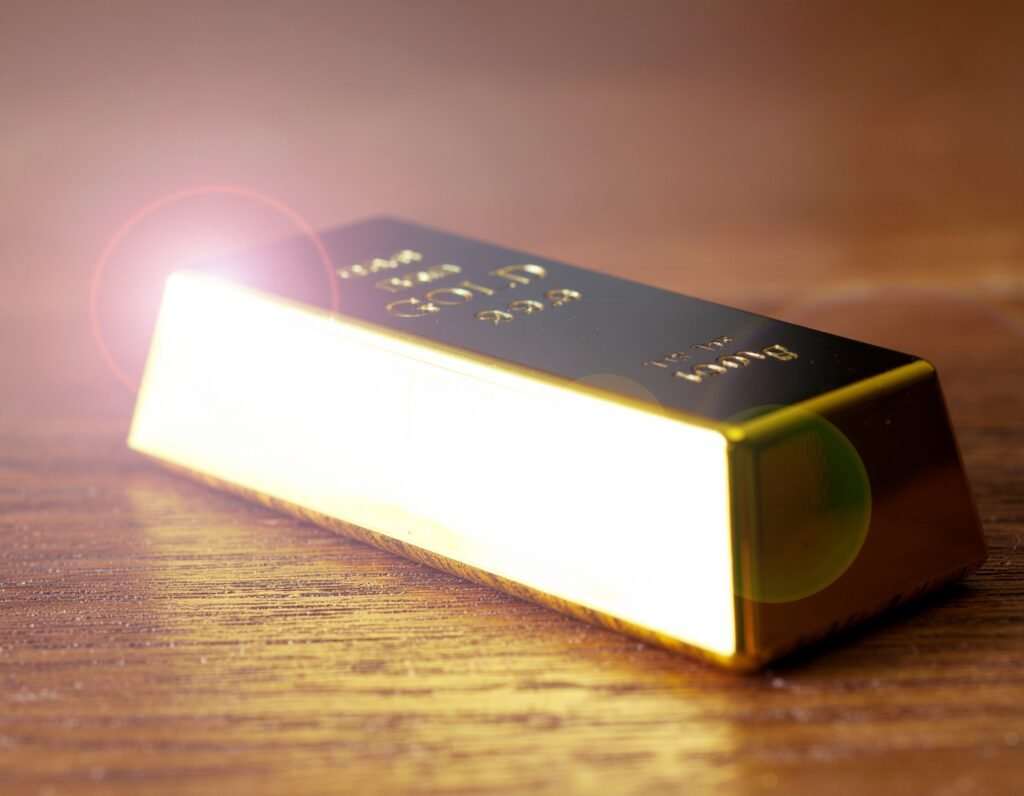
For thousands of years, there has been an element that has fired humanity’s imagination, witnessed the rise and fall of civilizations, and underpinned economic systems: Gold. It is not merely a metal, but a symbol of trust, a display of power, and an eternal pursuit of aesthetics. From the tombs of Egyptian pharaohs to modern electronic circuit boards, from the trading floors of Wall Street to the glitter of Indian weddings, gold has always been the brightest player on the stage.
So, why is this yellow metal so indispensable? How does this journey from the deep earth to our tables, vaults, and bank reserves actually take place?
The Extraction and Processing of Gold
The answer to the question, “How is gold extracted?” is far more complex than a simple phrase like, “it is dug up.” It is a multibillion-dollar global industry where geology, engineering, chemistry, and massive logistics converge.
Discovery and Exploration (Prospection)
Gold doesn’t rain from the sky. Mining companies spend millions of dollars to locate potential gold deposits. This is the technological version of modern-day treasure hunting.
- Geological Mapping: Geologists use satellite imagery and geophysical data to pinpoint areas with a high probability of containing gold (often near fault lines or in volcanic rock formations).
- Sampling: Once on the ground, samples are taken from the soil (geochemistry) and rocks. These samples are analyzed in the lab to measure the amount of gold per ton (in grams/ton).
- Drilling: If initial results are promising, “core drilling” begins. Drills descend hundreds of meters into the earth, extracting rock cores. This creates a three-dimensional map showing how deep and how rich the ore is.
If a region is confirmed to contain an economically viable quantity of gold, the multi-billion dollar mine project is set in motion.
How is Gold Extracted? (Extraction)
Gold mining is fundamentally divided into two main categories based on the extraction method:
1. Placer Mining (Surface Mining): This is the classic method familiar from “Gold Rush” movies. It targets free gold particles (dust or small nuggets) typically found in riverbeds, ancient stream deposits, or alluvial soils.
- Panning: The most primitive method. Water mixed with sand is scooped into a pan and swirled in a circular motion. Low-density sand and gravel are washed out, while the much denser gold particles settle at the bottom.
- Sluicing: In larger-scale placer mining, water is run through a wooden channel (sluice box). Riffles (ridges) at the bottom of the box trap the heavy gold particles.
Placer mining is generally used in smaller-scale operations or by artisanal miners.
2. Hard Rock Mining (Lode Mining): The vast majority of today’s global gold production comes from this method. The gold is trapped in particles too small to be visible within solid rocks (usually quartz).
- Open-Pit Mining: If the ore is close to the surface, mining is done by excavating gigantic pits. Rocks are blasted with dynamite and hauled out by enormous trucks.
- Underground Mining: If the ore is deep, tunnels and shafts are excavated to reach it. This is a more costly and hazardous method.
Gold Processing
This is where the magic begins. How are microscopic gold particles separated from those enormous pieces of rock?
Crushing and Grinding: Giant rock blocks from the mine site are first broken down in huge jaw crushers. They are then sent with water into massive grinding mills (SAG or Ball Mills). The goal is to grind the rocks down to a consistency of almost powder. The gold particles are liberated at this stage.
Separation (Leaching): Chemical methods are used to “dissolve” the gold from the ground material, which is now a slurry (pulp). The most common method globally (%90) is Cyanide Leaching (Cyanidation).
- What is Cyanidation? The ground ore is mixed with a dilute sodium cyanide solution in large tanks.
- Chemical Reaction: The cyanide selectively dissolves the gold, turning it into a liquid complex compound. Simply put, the gold is no longer solid but part of the liquid solution.
- Gold Recovery: This gold-loaded cyanide solution is usually passed through “activated carbon” filters. The activated carbon acts like a sponge, drawing the gold out of the solution onto its surface.
- Stripping: The gold-saturated carbon is then treated with a special chemical process to remove the gold, which is again taken into a liquid solution.
This method must be managed under very strict regulations and high safety measures (tailings dams, neutralization) due to its environmental risks.
Refining (Purification): The product obtained from the previous steps is not yet pure gold. It also contains other metals like silver, copper, and zinc. This crude product is called a “Doré Bar.” Doré bars are sent to high-tech refineries. Here, one of two main methods is typically used:
- Miller Process: Chlorine gas is passed through the molten Doré bar. Chlorine reacts more readily with silver and other metals than with gold, separating them as slag (waste). This process yields gold of %99.5 purity.
- Wohlwill Process (Electrolysis): This method is used for the highest purity. Gold from the Miller process is made the anode (positive pole) in an electrolytic cell. Pure gold sheets are the cathode (negative pole). When an electric current is applied, gold at the anode dissolves and deposits in a pure state on the cathode. Silver and other impurities settle at the bottom of the tank.
From Art to Craft: Gold Jewelry Making
Gold’s aesthetic value stems from its chemical and physical properties: ease of shaping (malleability), resistance to corrosion (oxidation), and unique luster. Gold transforms into a work of art as it moves from bar to jewel.
Karat System and Alloys
Pure gold (24 Karat) is often too soft for jewelry making. Therefore, it is alloyed with metals like copper, silver, zinc, or palladium to increase its durability and change its color.
- 24 Karat (%99.9 Pure): Used in investment bars, rare for jewelry.
- 22 Karat: Popular in traditional Indian and Middle Eastern jewelry, relatively soft.
- 18 Karat (%75 Pure): Standard for high-quality jewelry, provides a good balance between durability and pure appearance.
- 14 Karat (%58.3 Pure): More common in Western markets, higher durability and more affordable.
Alloys also determine the gold’s color:
- Yellow Gold: A balanced mixture of silver and copper.
- White Gold: Alloyed with palladium, nickel, and zinc, then often plated with rhodium for a bright white finish.
- Rose/Red Gold: High copper content.
Manufacturing Processes
The essential techniques used in jewelry making include:
- Casting: The most common method. Molten gold is poured into a mold created from a wax model.
- Forging & Fabrication: Shaping the metal by hammering, drawing into wire, or rolling into thin sheets, either by hand or machine.
- Stamping: In mass production, high-pressure presses are used to form shapes on metal sheets.
- Stone Setting: The skilled placement and securing of gemstones into the gold structure.
Gold’s Place in History and Cultural Significance
Gold’s allure is universal and timeless. Throughout history, no element has had the same versatility of roles as gold.
The Rise of Civilizations and Gold
Gold can be traced back to the oldest gold artifacts in the Varna (Bulgaria) necropolis, dating to 4000 BC.
- Ancient Egypt: Gold was associated with the gods and symbolized the eternity of the pharaohs. Tutankhamun’s mask is the pinnacle of gold’s artistic and spiritual power. Egyptians believed gold never tarnished and was the “flesh of the Gods.”
- Lydia and Currency: The turning point when gold transitioned from a mere trade item to an official currency occurred in the Kingdom of Lydia in Anatolia in the 7th century BC. The first standardized, stamped coin, the electrum (gold-silver alloy), was minted. This marked the beginning of modern trade and economic systems.
- Rome and Spain: The Roman Empire was heavily dependent on gold mines to finance its imperial ambitions. Later, the Spanish conquistadors seized the immense gold reserves of the Aztec and Inca civilizations in the Americas, forever changing the economic landscape of Europe.
Its Role in Investment and Economic Value
Gold’s value comes not only from its aesthetic and industrial uses but also from its unique position within the financial system.
Why Is It So Valuable?
- Scarcity and Rarity: Gold is a relatively rare element in the Earth’s crust. It is estimated that the total amount of gold ever mined throughout history would only fill about one Olympic-sized swimming pool. The discovery of new gold reserves is becoming increasingly difficult. This limited supply gives it a characteristic that preserves its value against inflation.
- Chemical Durability: Gold is an inert metal. This means it does not rust, tarnish, or react with most acids. This physical durability means it can retain its value and luster for centuries, making it a reliable long-term store of value.
- Trust and Universality: Gold has been accepted as money for thousands of years. Its value is universally recognized even in times of government collapse, hyperinflation of a currency, or war. This psychological factor of trust makes gold a global “safe-haven asset.”
Gold as an Investment Vehicle
Gold plays a vital role in modern portfolio theory. It often exhibits a negative correlation with traditional financial assets like stocks and bonds.
- Safe Haven: During periods of market uncertainty, geopolitical risks, or high inflation, investors turn to gold to hedge against the risk of losing value in paper money or stocks. The price of gold usually rises during these periods.
- Hedge Against Inflation: When the purchasing power of currencies drops due to inflation, the value of gold generally increases. By leveraging the advantage of its limited supply, gold provides a natural hedge against the effects of monetary expansion.
- Investment Methods:
- Physical Gold: Bars, coins, and jewelry (as savings). Considered the most secure method but incurs storage costs.
- Exchange-Traded Funds (ETFs): Gold-backed ETFs allow investors to benefit from price movements without taking physical ownership of the gold. They offer high liquidity.
- Gold Futures: Typically used by institutional investors and speculators for leveraged trading.
- Mining Company Stocks: These shares are affected by the price movements of gold, as well as the company’s efficiency and management quality.
The Metal of Eternity
Gold is much more than an element; it is the embodiment of both a material and spiritual heritage. Its journey, which begins deep within the earth, is shaped by complex scientific and engineering processes and reaches every corner of modern civilization.
Gold’s value cannot be measured solely in karats or ounces. Its value lies in the trust it has generated over thousands of years, the stability it holds in its power of accumulation, and its infinite uses, from art to technology. History has shown us that the form of money can change and economic systems can collapse, but the universal appeal and reliability of gold have never faded.